What should you do if a child puts something in their nose or ear?
If a child puts a bead, toy part or another object in the nose or ear, avoid probing with cotton buds, tweezers or water: this can push it deeper or cause injury. A button battery, sharp object or paired nasal magnets need immediate emergency assessment. If the child is choking or struggling to breathe, call Bangladesh’s 999. Other retained objects also need timely examination. [1,2,3,4]
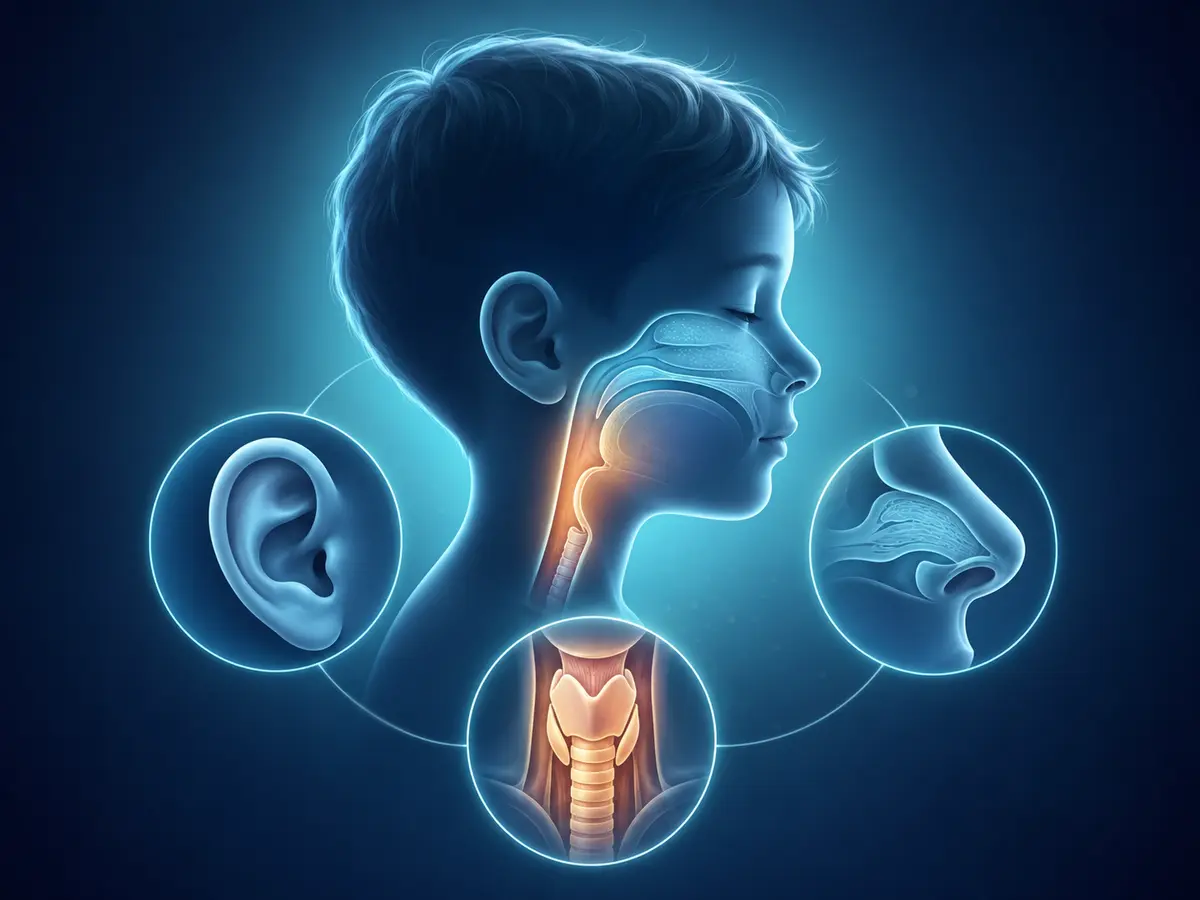
What is a foreign body, and why does it happen?
A foreign body is an object that does not belong in the nose or ear. Young children may insert beads, small toy parts, paper or food while playing. A small disc battery from a toy, remote or watch is particularly important: it can injure nearby tissue even when the child initially seems well. [1,2,3]
Which symptoms might suggest an object is stuck?
A nasal object may cause one-sided blockage, discomfort, bleeding or later a one-sided foul-smelling or blood-stained discharge. An ear object may cause pain, a blocked sensation, hearing difficulty or discharge. Sudden coughing, choking or trouble breathing raises concern about airway involvement. A smelly discharge does not prove an object is present, but warrants examination. [1,2,3]
What should a caregiver do first—and avoid?
Keep the child calm. Note what might have been inserted, where and when; bring an identical item if available. Do not repeatedly probe the nose or ear with a cotton bud, tweezers, pin or finger. Do not put water or drops into an ear if the object or eardrum condition is unknown. If an object seems to have come out but pain, bleeding, discharge or hearing difficulty remains, arrange examination. [1,3]
The first well-planned removal attempt has the best chance of success. Repeated failed attempts can make removal harder or cause injury. [1]
When is emergency care needed now?
Go to an emergency department immediately if a button battery might be in the nose or ear—even if the child seems well. Paired magnets, or a magnet and metal object trapped across the nasal septum, also need urgent assessment. A sharp or deeply lodged object or significant bleeding calls for prompt in-person care. [1,2,3]
For choking or major breathing difficulty, call 999 in Bangladesh or seek emergency care immediately. Do not blindly sweep a finger through the mouth. Follow age-appropriate choking first aid if you know it while help is arranged. [4]
How does an ENT clinician assess the child?
The clinician asks what happened and whether anyone has attempted removal. The nose is examined under good light; the ear is examined with an otoscope. The object's type and position and the child's ability to remain still guide the approach. Ordinary objects do not all need X-rays. Imaging may be considered when a battery or magnets are suspected but cannot be directly seen. [1,2,3]
Explore nose care, ear care and other causes of nasal blockage for related concerns.
What treatment options are available?
A trained clinician may remove an appropriate object under direct vision using an instrument or suction. Techniques differ between nose and ear and depend on the object. ENT help may be needed for a deep object, an unsuccessful safe first attempt or a child who cannot safely remain still. Anaesthesia may be considered in selected cases for safe removal. [1,2,3]
Afterwards, the clinician checks for injury, bleeding or another retained object. Antibiotics are not automatically needed just because an object was present; further care follows the examination findings. [2,3]
For non-emergency follow-up, see paediatric ENT care. Do not wait for a chamber appointment if a battery or breathing problem is suspected.
What are the key takeaways?
Do not make repeated removal attempts at home. A suspected button battery in the nose or ear and paired nasal magnets need emergency assessment. Choking or major breathing difficulty calls for emergency services. Other retained objects need timely examination; safe removal depends on the child and object.
Frequently asked questions
I can see a bead. Can I pull it out with tweezers?+
It is safer to have it assessed. A smooth bead can slip deeper, and the appropriate removal technique depends on its location. [1]
The child seems fine after inserting a battery. Can we wait until tomorrow?+
No. A suspected button battery in the nose or ear needs emergency assessment now, even without obvious symptoms. [1,3]
Could a one-sided smelly nasal discharge mean an object is stuck?+
Yes, it is one possibility. Other causes exist, so the child's nose should be examined. [1,2]
The ear object came out. Does the child still need a check?+
Arrange assessment if pain, bleeding, discharge, hearing difficulty or concern about a remaining fragment persists. [3]
For non-emergency care, see paediatric ENT and the Jatrabari or Malibagh chambers. Seek emergency care for a battery or breathing difficulty.
Related ENT services
Paediatric ENT careENT assessment of childhood adenoid and tonsil problems, snoring, glue ear, hearing difficulty and speech delay, with surgery when indicated.→Nose and sinus conditionsAssessment of nasal blockage, a deviated septum, nasal polyps, recurrent or chronic sinus symptoms and enlarged turbinates.→Ear conditions and hearing careAssessment of ear infection, discharge, wax and hearing difficulty, with hearing tests, childhood speech-delay assessment and rehabilitation planning.→This article provides general information for caregivers. It is not a diagnosis, an emergency service or a substitute for direct assessment of the child.