Direct answer
Occasional snoring during a cold is not always dangerous. Assessment is appropriate when a child snores most nights, mouth-breathes, has witnessed pauses or gasps, sleeps restlessly, or develops changes in behaviour, learning or growth. Enlarged adenoids and tonsils are common contributors, but an X-ray alone should not determine the diagnosis or need for surgery.
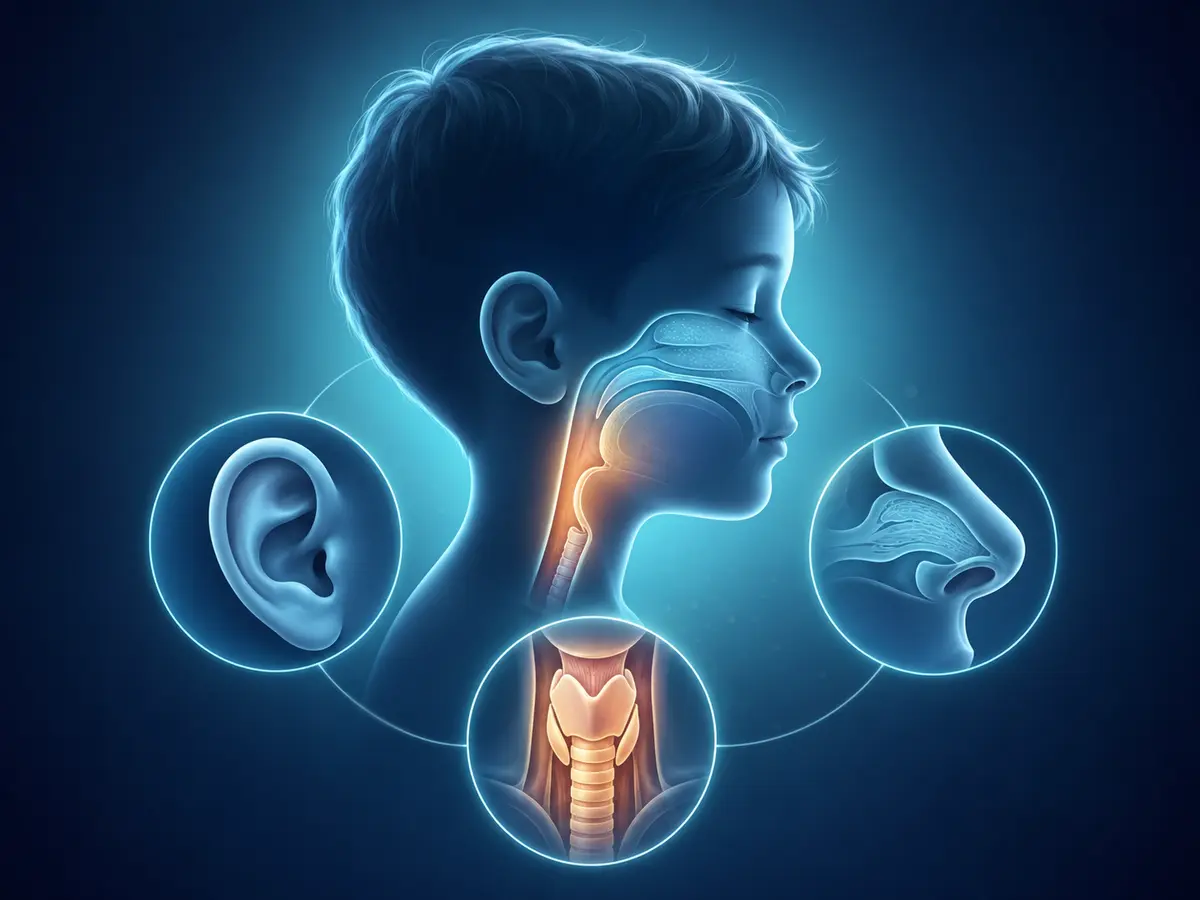
Symptoms
- Loud snoring on most nights
- Witnessed breathing pauses, gasps or choking sounds
- Sleeping with the mouth open or daytime mouth breathing
- Restless sleep, unusual sleep positions or repeated waking
- Dry mouth, morning headache or unrefreshing sleep
- Irritability, hyperactivity, inattention or reduced school performance rather than obvious sleepiness
- Bedwetting, poor growth or feeding difficulty
- Persistent nasal blockage, nasal speech, recurrent ear problems or hearing concern
Possible causes
- Enlarged adenoids and/or tonsils
- Allergic rhinitis or persistent nasal inflammation
- Overweight or obesity
- Craniofacial or neuromuscular conditions
- Down syndrome or another high-risk medical condition
- Another nasal obstruction, less commonly
- Temporary congestion during a cold, which differs from persistent sleep-disordered breathing
How it is assessed
- Take a caregiver history of frequency, duration, pauses, gasping, sleep position and daytime effects
- Review a safely recorded home sleep video when available; it does not replace a sleep study
- Assess growth, weight, blood pressure and high-risk conditions
- Examine the nose, mouth, palate, jaw and tonsils and consider ear/hearing concerns
- Use flexible nasal endoscopy selectively to view the adenoids and nasal airway; routine X-rays are not required for everyone
- Use tympanometry or audiometry when hearing loss or glue ear is suspected
- Give particular consideration to pre-operative polysomnography in children under two or with obesity, Down syndrome, craniofacial or neuromuscular disorders, sickle-cell disease or mucopolysaccharidoses
- Arrange an overnight sleep study when symptoms and examination disagree or the need for surgery is uncertain
Treatment options
- Observe and provide safety-net advice for mild, temporary snoring associated with a cold
- Treat confirmed allergic rhinitis with trigger reduction and clinician-directed care; do not self-start prolonged decongestants or steroids
- Offer family-centred healthy-weight support when relevant, without blame
- Use shared decision-making about adenoidectomy or adenotonsillectomy for clinically important obstruction or documented OSA
- Assess glue ear or hearing difficulty through its own evidence-based pathway
- Consider watchful waiting or medical management in selected mild cases
- Explain that surgery does not guarantee complete resolution; persistent or recurrent symptoms may need follow-up and repeat sleep assessment
- Do not rely on home remedies, antibiotics or cough syrup to correct airway obstruction
When to seek emergency care
- Significant breathing difficulty, chest recession or stridor while awake
- Blue lips or face
- Prolonged breathing pauses with difficult recovery or repeated choking
- Inability to swallow saliva, drooling or rapidly increasing throat/neck swelling
- Marked drowsiness, confusion or difficulty waking the child
- Inability to feed or signs of dehydration
- Rapidly worsening night-time breathing in a child with severe obesity or another high-risk condition
Clinical perspective
Asking only whether a child snores does not establish severity. I ask how many nights it occurs, whether there are pauses or gasps, how restless sleep is, and whether behaviour, school performance, growth or bedwetting has changed.
Adenoids cannot usually be seen by simply looking into the mouth. Tonsil size is visible but does not show the entire airway. I select endoscopy or a sleep study only after correlating the history and examination.
Surgery should not be based on one report saying the adenoids are large. Age, symptom burden, tonsil size, allergy, weight, glue ear, comorbidity and family preferences all matter.
Frequently asked questions
Does every child who snores have enlarged adenoids?+
No. Colds, allergy, tonsils, weight and airway anatomy may all contribute. The cause cannot be confirmed without appropriate clinical assessment.
Can adenoids be seen by looking in the mouth?+
Usually not; they sit behind the nose. Flexible nasal endoscopy or selected imaging can assess them when needed, but not every child requires a test.
Does a large adenoid on X-ray automatically mean surgery?+
No. The image must be correlated with night-time breathing, daytime effects, examination, age, hearing and comorbidity.
Does every child need a sleep study?+
No. It is particularly useful in very young or high-risk children, when symptoms and examination disagree, or when diagnosis, severity or the need for surgery is uncertain.
Will adenoid or tonsil surgery definitely stop snoring?+
No. Many children improve, but obesity, allergy or obstruction elsewhere can cause persistent or recurrent symptoms. Follow-up matters.
Can I show the clinician a sleep video?+
Yes. A short, privacy-conscious recording can help demonstrate the breathing pattern, but it does not replace examination or a sleep study when one is indicated.
Related ENT services
Paediatric ENT careENT assessment of childhood adenoid and tonsil problems, snoring, glue ear, hearing difficulty and speech delay, with surgery when indicated.→Throat ConditionsDiagnosis of sore throat, recurrent tonsillitis, swallowing difficulty, reflux-related symptoms and neck lumps.→ENT and head–neck treatment and surgeryFind ENT services by category, including ear, nose, throat, paediatric, thyroid and head and neck care, with individual treatment and surgery information.→ENT Specialist in JatrabariENT assessment for ear, nose, throat, paediatric ENT, hearing, sinus and head-neck concerns at Ibn Sina Diagnostic & Consultation Center, Uttar Jatrabari.→ENT Doctor in MalibaghAdult and paediatric assessment for ear, nose, throat, hearing, vertigo and head-neck concerns at Ibn Sina Diagnostic & Consultation Center, Malibagh.→For patient education; not a substitute for individual diagnosis or treatment. Seek emergency care for red-flag symptoms.