Direct answer
Hoarseness after a cold or heavy voice use is often temporary. Arrange ENT assessment if the voice has not recovered within four weeks, or sooner for breathing difficulty, painful or difficult swallowing, coughing blood, a neck lump, referred ear pain or sudden complete voice loss. Do not self-start antibiotics, steroids or reflux treatment without establishing the likely cause.
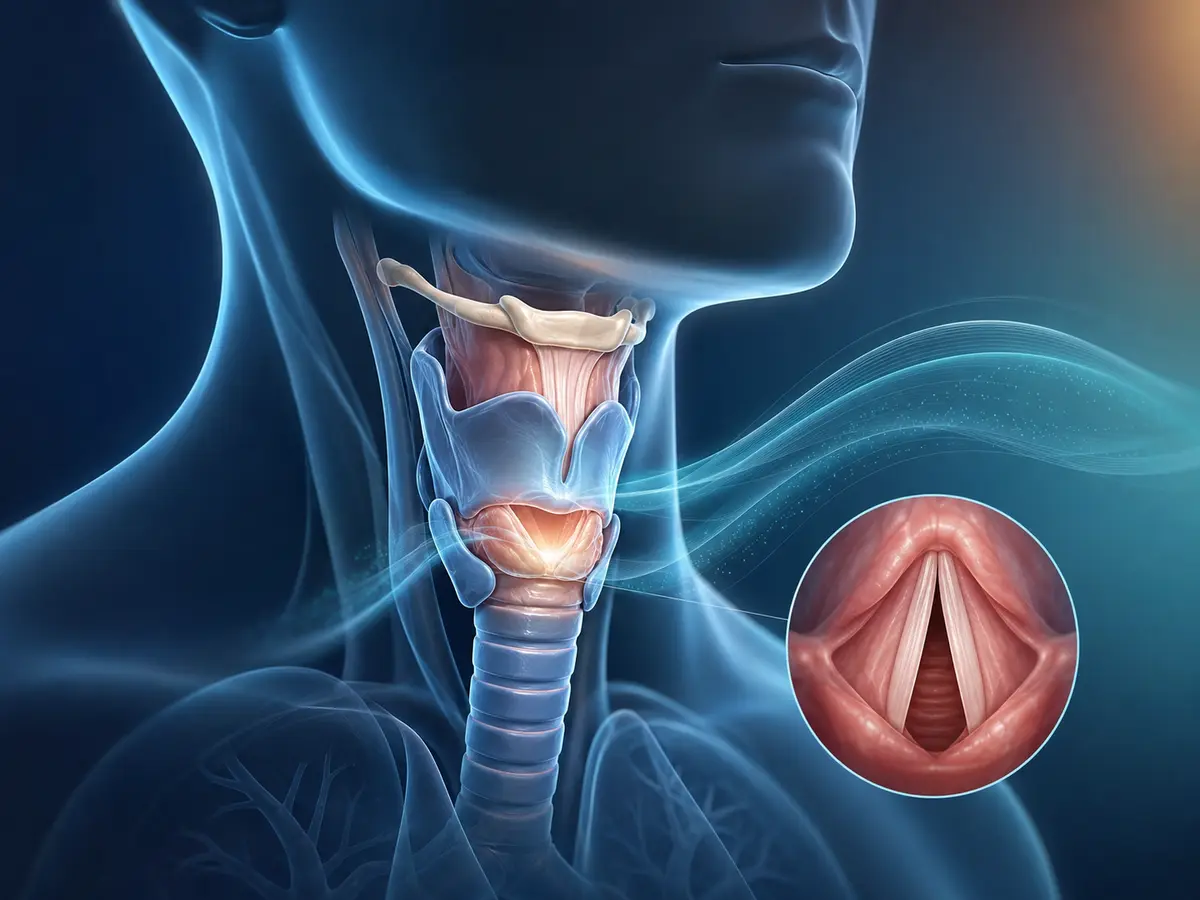
Symptoms
- A raspy, rough, breathy or strained voice
- Reduced volume or a change in pitch
- Extra effort when speaking or rapid vocal fatigue
- Frequent throat clearing, dryness or discomfort
- Loss of upper range or singing notes
- Intermittent or constant voice change
- Pain, cough or discomfort with speaking or swallowing
Possible causes
- Viral laryngitis or an upper-respiratory infection
- Shouting, prolonged speaking, inefficient technique or other vocal overuse
- Allergy, irritants, dehydration, smoking or vaping
- Gastro-oesophageal or laryngopharyngeal reflux; hoarseness alone does not prove reflux
- Vocal nodules, polyps, cysts or vocal-fold haemorrhage
- Vocal-fold paresis or paralysis, sometimes associated with intubation, neck/chest surgery, nerve injury or other disease
- Neurological voice disorders
- Less commonly, laryngeal or another head-neck malignancy
How it is assessed
- Clarify onset, duration, progression and any relationship to a cold or heavy voice use
- Review smoking, professional voice use, reflux/allergy symptoms, medication, trauma, intubation and neck/chest surgery
- Examine the mouth, throat, neck, cranial nerves and breathing pattern
- Perform laryngoscopy when dysphonia has not improved within four weeks, or earlier when a serious cause is suspected
- Inspect vocal-fold surface, closure and movement with flexible laryngoscopy; add videostroboscopy when useful
- Avoid routine CT/MRI before visualising the larynx; select imaging according to the findings
- Biopsy a suspicious lesion and arrange targeted swallowing, chest, thyroid or neurological assessment when indicated
Treatment options
- For an uncomplicated acute viral or overuse episode, maintain hydration, use relative voice rest and avoid shouting or whispering
- Avoid smoking, vaping and irritating dust or fumes
- Use speech-language therapist-led voice therapy when the laryngeal examination supports it
- Provide clinician-directed care for an identified or likely allergy, reflux, infection or neurological cause
- Consider microlaryngoscopy, biopsy or surgery for selected polyps, benign lesions, airway problems or suspicious lesions
- For vocal-fold paralysis, tailor observation, therapy, injection or framework surgery to cause, airway, swallowing and voice needs
- Do not use routine antibiotics for uncomplicated hoarseness, and do not automatically start steroids or reflux medicine before visualising the larynx
- Outcome depends on cause, duration and response; complete recovery cannot be guaranteed
When to seek emergency care
- Breathing difficulty, noisy breathing or stridor, choking or blue lips
- Inability to swallow saliva or rapidly increasing throat/neck swelling
- Coughing or spitting blood
- A new or enlarging neck lump
- Progressive difficulty or pain when swallowing
- Persistent one-sided throat pain or same-side ear pain on swallowing
- Unexplained weight loss, particularly with a smoking history
- New persistent hoarseness after neck/chest surgery or intubation
- Sudden voice loss during shouting or singing, suggesting possible vocal-fold haemorrhage
Clinical perspective
In Bangladesh, patients often start antibiotics, steroids or reflux medicines as soon as the voice becomes hoarse. The same symptom can follow infection, voice misuse, a benign vocal-fold lesion, paralysis, neurological disease or malignancy, so prolonged empirical treatment without seeing the larynx is unsafe.
I assess whether the change is constant or intermittent, its duration and effect on work, smoking, reflux symptoms, recent intubation and thyroid, neck or chest surgery. Flexible laryngoscopy usually allows outpatient inspection of the vocal folds within minutes.
A small change can have a major impact on a teacher, singer, caller or other professional voice user. Conversely, the threshold for prompt examination should be lower in a smoker or someone with a neck lump, swallowing difficulty, referred ear pain or weight loss.
Voice therapy, reflux or allergy treatment, surgery and further investigation should follow the laryngeal findings. A complete voice recovery cannot be guaranteed.
Frequently asked questions
How long should I wait before seeing an ENT for hoarseness?+
The larynx should be examined if the voice has not improved within four weeks. NIDCD advises medical review after three weeks. Do not wait when breathing, bleeding, a neck lump or swallowing problems occur.
Is flexible laryngoscopy painful?+
A thin flexible scope is passed through the nose to view the vocal folds. It is usually a brief outpatient examination, sometimes with local anaesthetic spray; the degree of discomfort varies.
Does every hoarse voice need reflux medicine?+
No. Reflux is one possibility, but hoarseness alone does not confirm it. Persistent voice change should be assessed and treatment matched to the history and laryngeal findings.
Will antibiotics make hoarseness recover faster?+
Not for uncomplicated viral laryngitis. Routine antibiotics should be avoided unless a clinician identifies a bacterial cause or another clear indication.
Is whispering a good form of voice rest?+
Whispering can still strain the larynx. Brief, comfortable speech, avoiding shouting and whispering, together with hydration is usually kinder to the voice.
Does persistent hoarseness mean cancer?+
No. Many causes are benign or treatable. Persistent unexplained hoarseness—especially with smoking or another red flag—cannot confirm or exclude cancer without examination.
Related ENT services
Voice and laryngeal conditionsAssessment of hoarseness, laryngitis, vocal fold nodules/polyps and reflux-related throat symptoms, with laryngoscopy and selected surgery.→Throat ConditionsDiagnosis of sore throat, recurrent tonsillitis, swallowing difficulty, reflux-related symptoms and neck lumps.→ENT and head–neck treatment and surgeryFind ENT services by category, including ear, nose, throat, paediatric, thyroid and head and neck care, with individual treatment and surgery information.→ENT Specialist in JatrabariENT assessment for ear, nose, throat, paediatric ENT, hearing, sinus and head-neck concerns at Ibn Sina Diagnostic & Consultation Center, Uttar Jatrabari.→ENT Doctor in MalibaghAdult and paediatric assessment for ear, nose, throat, hearing, vertigo and head-neck concerns at Ibn Sina Diagnostic & Consultation Center, Malibagh.→For patient education; not a substitute for individual diagnosis or treatment. Seek emergency care for red-flag symptoms.