Direct answer
Chronic rhinosinusitis (CRS) is inflammation of the nose and sinus lining causing nasal blockage or discharge with reduced smell or facial pressure for at least 12 weeks. Diagnosis requires symptoms plus objective inflammation on nasal examination, endoscopy or selected CT. Treatment centres on saline irrigation, intranasal corticosteroids and contributor control; surgery may be considered when appropriate medical care does not adequately control confirmed disease.
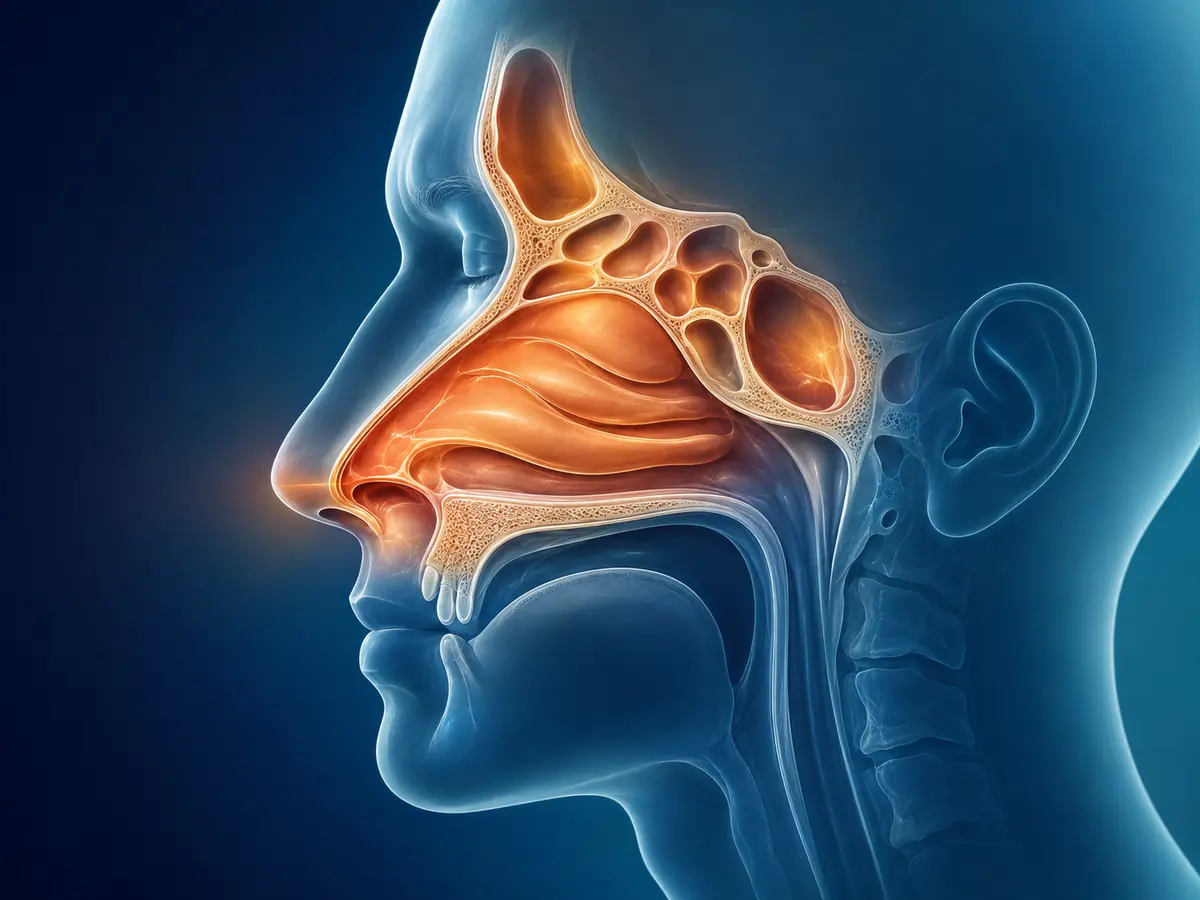
Symptoms
- Persistent or recurrent nasal blockage and congestion
- Anterior nasal discharge or post-nasal drainage
- Reduced or absent sense of smell
- Pressure or heaviness around the face, eyes or forehead—isolated facial pain may have another cause
- Cough, throat clearing, bad breath or ear pressure
- Poor sleep, fatigue and reduced day-to-day quality of life
Possible causes
- Chronic inflammatory disease of the nose and sinuses, with or without nasal polyps
- Coexisting allergic rhinitis, asthma or NSAID-exacerbated respiratory disease
- Exposure to tobacco smoke, irritants and air pollution
- Anatomical narrowing may contribute, but a deviated septum on CT alone does not prove CRS
- Dental infection, immune deficiency or ciliary disorders in selected patients
- Several factors may coexist; CRS should not automatically be labelled a bacterial infection
How it is assessed
- Confirm symptoms have lasted at least 12 weeks and include blockage or discharge with smell loss or facial pressure
- Review one-sided symptoms, bleeding, dental symptoms, asthma/allergy, medicines, smoking and previous treatment
- Use anterior rhinoscopy and nasal endoscopy when appropriate to look for oedema, discharge, polyps or a mass
- Use an appropriate sinus CT for objective confirmation, suspected complication, persistent disease or surgical planning—not routine plain X-rays
- Consider allergy, immune-function, dental or smell assessment in selected cases
- Record symptom burden and quality-of-life impact to judge treatment response
Treatment options
- Use regular isotonic saline irrigation; if preparing solution at home, follow NHS guidance and use water that has been boiled and cooled
- Use an intranasal corticosteroid regularly with correct technique; benefit may take several weeks
- Address contributors such as allergy, asthma, smoking exposure or dental disease
- Antibiotics are not an automatic or routine long-term treatment; a clinician may use them for a selected bacterial exacerbation or other clear indication
- Use a short oral steroid only in selected severe polyp disease after clinician assessment of benefits and risks—not by self-medication
- Discuss endoscopic sinus surgery when important symptoms and objective disease persist despite appropriate medical treatment
- Continue indicated saline, topical treatment and follow-up after surgery; polyps can recur
When to seek emergency care
- Rapid swelling of the eyelid or tissues around the eye
- Reduced vision, double vision, painful eye movement or a protruding eye
- Severe or rapidly worsening frontal headache or forehead swelling
- Neck stiffness, confusion, unusual drowsiness or seizure
- New facial weakness, limb weakness or another neurological deficit
- Rapid deterioration in a severely unwell or immunocompromised person
Clinical perspective
In Bangladesh, patients with months of congestion or facial pressure may receive repeated short courses of antibiotics and decongestants. CRS is primarily a chronic inflammatory disorder; treatment without confirming the diagnosis can miss polyps, another cause or an important one-sided warning sign.
I first establish whether symptoms have truly continued for at least 12 weeks, whether blockage or discharge occurs with smell loss or facial pressure, and how sleep and daily function are affected. I then perform anterior nasal examination and use nasal endoscopy when indicated.
Not everyone needs CT at the first visit. It is most useful when the diagnosis remains uncertain, a complication is suspected, symptoms persist despite appropriate medical treatment, or surgery is being planned.
I do not present surgery as a permanent cure. In selected patients it can improve sinus ventilation and access for topical treatment; saline, nasal steroid and follow-up may still be needed, particularly in polyp-prone disease.
Frequently asked questions
Is chronic sinusitis always an infection?+
No. CRS is primarily a long-term inflammatory condition. Infection may contribute to some episodes, but mucus colour alone does not confirm bacterial infection.
Does 12 weeks of nasal blockage automatically mean CRS?+
No. The symptom pattern matters, and objective nasal examination, endoscopy or CT should support the diagnosis. Allergy, a deviated septum, medication effects or a mass can also cause obstruction.
Does everyone need a CT scan immediately?+
Usually not. CT is more useful after clinical assessment when the diagnosis is uncertain, a complication is suspected, treatment has not worked or surgery is being planned.
Will antibiotics cure chronic rhinosinusitis?+
There is no guarantee, and routine antibiotics are not the core treatment for CRS. Saline, intranasal corticosteroids and contributor control are central; antibiotics are reserved for selected indications.
Does FESS guarantee that sinusitis will never return?+
No. In selected patients surgery can improve drainage, ventilation and topical medicine delivery, but ongoing medical care and follow-up may be needed, and polyps can recur.
Related ENT services
Nose and sinus conditionsAssessment of nasal blockage, a deviated septum, nasal polyps, recurrent or chronic sinus symptoms and enlarged turbinates.→Endoscopic sinus surgery (FESS)Learn why FESS may be considered for persistent sinus disease, including endoscopy/CT, alternatives, risks and postoperative care.→Allergy and allergic rhinitisAssessment of sneezing, itching, a runny or blocked nose, with trigger advice and treatment tailored to allergic rhinitis.→For patient education; not a substitute for individual diagnosis or treatment. Seek emergency care for red-flag symptoms.