Direct answer
Persistent smelly ear discharge with hearing loss can suggest cholesteatoma, but examination is needed. This collection of skin cells behind the eardrum is not cancer, yet it can damage nearby structures. Drops may control infection without removing the disease. Surgery and long-term follow-up are usually needed; new facial weakness or severe vertigo warrants urgent assessment. [1,2,3,4]
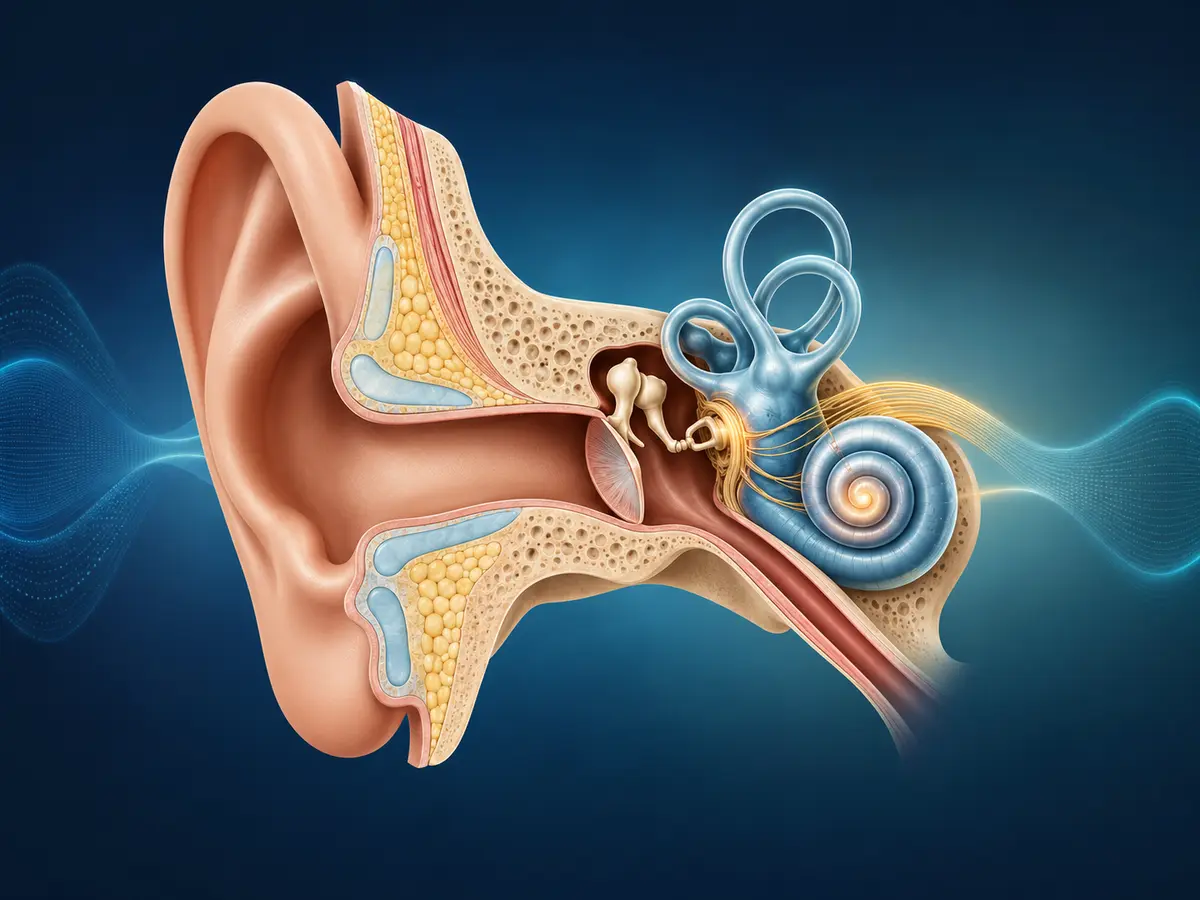
What is cholesteatoma, and why does it develop?
Skin cells accumulate abnormally behind the eardrum. This is not cancer, but it can erode nearby bone. Cells may become trapped in an inward-folded eardrum pocket; some cases are congenital. [2,3]
Which symptoms should you notice?
Usually one ear develops offensive discharge, reduced hearing, recurrent infection, tinnitus or pain. Not all ear discharge is cholesteatoma, and little pain does not exclude it. [1,2]
How is it assessed?
An ENT clinician examines the canal and eardrum, sometimes after careful microscope-assisted cleaning. A hearing test documents hearing function. Selected patients need CT to assess extent and plan surgery. [1,3,4]
Can drops treat it, or is surgery needed?
Prescribed drops can control infection but cannot remove the trapped skin collection. Surgery is usually needed; selected people unable to undergo surgery may receive regular specialist cleaning and surveillance instead, without a cure guarantee. [2]
Mastoidectomy, with eardrum or hearing-bone reconstruction when appropriate, aims to clear disease and make the ear safe. Hearing may improve, remain unchanged or worsen. See the related tympanoplasty recovery guide. [3,4]
Which warning signs need urgent care?
Seek same-day urgent assessment for new facial weakness, severe vertigo or rapid deterioration. Severe headache, fever and neck stiffness need emergency care: intracranial infection is rare but serious. Sudden facial droop with arm weakness or speech difficulty also needs emergency help for possible stroke. [1,2]
Why does follow-up matter after surgery?
Disease may remain or recur, so long-term review and sometimes further surgery are necessary. Follow the surgeon’s instructions about keeping the ear dry and caring for packing. [4]
Key takeaway: a dry ear does not prove that cholesteatoma has gone. Discuss hearing expectations and follow-up before treatment. Sources checked: 18 October 2026.
Frequently asked questions
Do fewer symptoms after drops mean it has gone?+
No. Infection can settle while cholesteatoma remains. [2]
Will surgery restore normal hearing?+
Not necessarily; disease extent and damage to the hearing mechanism affect the result. [3,4]
Can it return?+
Yes. Keep the long-term follow-up arranged by your surgical team. [4]
Explore ear and hearing care for planned assessment. Emergency symptoms should not wait for a routine appointment.
Related ENT services
Ear conditions and hearing careAssessment of ear infection, discharge, wax and hearing difficulty, with hearing tests, childhood speech-delay assessment and rehabilitation planning.→MastoidectomyMastoidectomy for cholesteatoma and selected chronic ear disease: assessment, disease-control goals, hearing expectations and long-term follow-up.→Hearing TestsAge- and symptom-appropriate tests help identify the type and degree of hearing loss.→Tympanoplasty: eardrum repairLearn when tympanoplasty may help an eardrum perforation, which tests are needed, alternatives, risks and recovery planning.→Patient education only; not a substitute for individual diagnosis or in-person medical care.