Does a parotid-gland lump mean cancer?
A lump in the parotid gland, in front of or below the ear, may be benign, but this cannot be confirmed by touch alone. Rapid growth, fixation, persistent pain, a neck node or new facial weakness needs prompt ENT–Head‑Neck assessment. Examination, ultrasound and image-guided FNAC or core biopsy usually guide diagnosis; open biopsy is generally not the first diagnostic step. [1,2,3,4]
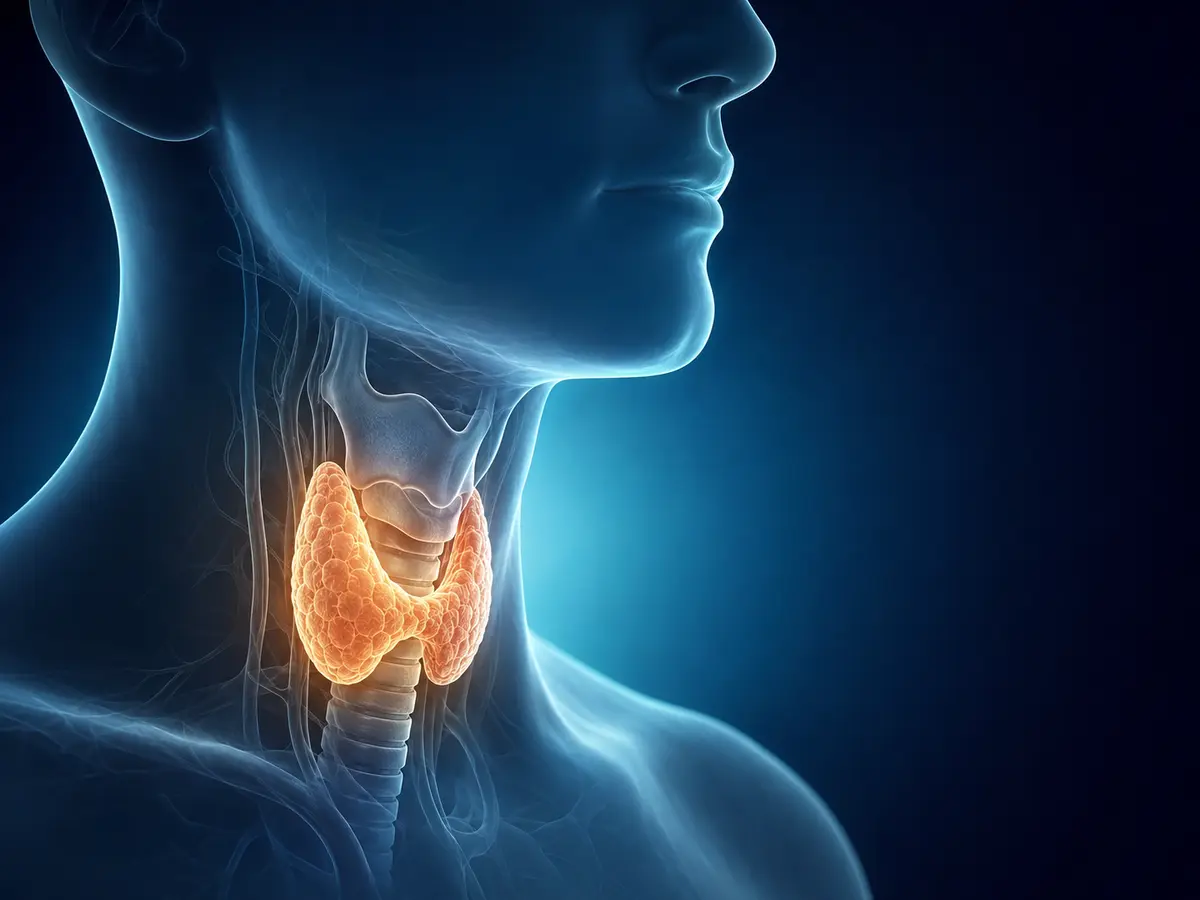
What is the parotid gland, and where does a lump appear?
The parotid is the largest salivary gland. It lies in front of and below the ear, extending towards the angle of the jaw. The facial nerve branches through the gland and moves the muscles of facial expression. Assessment therefore includes the lump and the symmetry of forehead movement, eye closure and smiling.
Touch alone cannot always confirm that a lump arises in the parotid. A skin lesion, lymph node, jaw problem or another soft-tissue mass may occur in the same region.
What can cause a parotid-gland lump?
Possible causes include viral or bacterial sialadenitis, salivary-duct obstruction, a cyst, an intraparotid lymph node, a benign tumour such as pleomorphic adenoma or Warthin tumour, and less commonly a primary or metastatic malignancy. Most salivary lumps are non-cancerous, but symptoms and touch alone cannot reliably distinguish benign from malignant disease. [1,4]
Pain or swelling that repeatedly worsens with meals can suggest obstruction. Fever, redness or pus at the duct can accompany infection. A slow painless lump may be benign, but a malignant tumour can also be painless.
Which symptoms should you notice?
Possible features include a lump in front of or below the ear or at the jaw angle, slow or rapid growth, pain or tenderness, swelling with meals, dry mouth, difficulty opening the mouth widely, an ear-canal symptom, a same-side neck node, facial numbness or asymmetry when smiling. [1,4]
New facial weakness—difficulty raising the forehead, fully closing the eye or moving the corner of the mouth—with a parotid mass raises concern about nerve involvement and needs prompt assessment. It does not prove cancer, but it is not a symptom to watch and wait. [1]
How is a parotid lump assessed?
History covers duration, growth, pain, meal-related swelling, fever, facial movement, skin cancer, smoking, previous radiation and previous tumours. Examination assesses size, mobility and skin, the mouth and salivary duct, every facial-nerve division and cervical lymph nodes.
Ultrasound and image-guided fine-needle aspiration cytology are commonly important first tests for a superficial parotid lump. A specialist may consider core needle biopsy if FNAC is inadequate or the diagnosis remains unclear. Contrast CT or MRI is selected for a deep-lobe lesion or concern about adjacent structures, bone, nerve or skull-base involvement. Imaging and FNAC/core biopsy are guideline-supported when salivary malignancy is suspected. [2]
Open biopsy is generally not the first diagnostic test because it can complicate definitive surgery. Imaging and needle-sampling results must be interpreted in clinical context, and final diagnosis sometimes depends on surgical histopathology. [2,3]
What treatment options are available?
Treatment depends on the cause. For infection or duct obstruction, a clinician may select hydration, oral care, pain relief, antibiotics or a stone/duct procedure as appropriate. Do not self-start antibiotics or aggressively massage an undiagnosed lump.
For a confirmed benign tumour, surveillance or surgery is discussed according to tumour type, growth, symptoms, age, its relationship to the facial nerve and operative risk. Parotidectomy may be recommended for selected tumours such as pleomorphic adenoma because they can enlarge or change over time; simply shelling a tumour from its capsule can increase recurrence risk.
For malignancy, parotid surgery, selected neck dissection, radiotherapy or other multidisciplinary care may be needed according to type, grade, stage and nerve or lymph-node involvement. When preoperative facial-nerve function is intact and a dissection plane exists, preserving the nerve is the aim. [2]
Discussion of parotidectomy should include temporary or permanent facial weakness, earlobe numbness, salivary leakage, Frey syndrome, bleeding, infection, scarring and contour change. No operation can guarantee cure or facial-nerve recovery.
Which warning signs need prompt or emergency care?
Seek prompt ENT–Head‑Neck assessment for:
Rapid enlargement; a hard, fixed or skin-tethered mass; new facial weakness or numbness; persistent pain; difficulty opening the mouth; skin ulceration; a neck node; or a lump that does not settle or repeatedly returns. [1,4]
Seek emergency care now for:
Sudden facial droop with arm or leg weakness/numbness, slurred speech, confusion or a severe new headache may indicate stroke—call 999 in Bangladesh. Rapidly spreading red-hot swelling, high fever, severe dehydration, breathing difficulty or inability to swallow saliva also needs emergency care.
What are the key takeaways?
Most parotid lumps are benign, but self-diagnosis is unreliable. Facial weakness is an important red flag. Clinical examination, ultrasound and image-guided FNAC or core biopsy guide diagnosis; open biopsy is generally not the first test. Treatment differs for infection, obstruction, a benign tumour and cancer.
Frequently asked questions
Does a parotid-gland lump mean cancer?+
No. Many parotid tumours are benign. Examination, imaging and needle sampling when indicated are needed to confirm or exclude malignancy reliably. [1,2]
Why is facial weakness a red flag?+
The facial nerve runs through the parotid. New weakness or numbness with a lump raises concern about nerve involvement and needs prompt specialist assessment. [1]
Can FNAC spread parotid cancer?+
Image-guided FNAC is a guideline-supported test for salivary lumps; cancer spread is not an expected complication. Core biopsy or another test may be needed if the sample is inadequate. [2]
Does every benign parotid tumour need surgery?+
No. Tumour type, growth, symptoms, age, facial-nerve relationship and operative risk inform a shared decision about surveillance or surgery.
Does parotidectomy always damage the facial nerve?+
No. Preservation is the aim when the nerve is intact, but temporary or permanent weakness risk varies with tumour size, location, pathology and nerve involvement. [2]
For assessment, explore salivary-gland care, head-and-neck cancer care, and the Jatrabari or Malibagh chambers. Do not wait for a routine appointment if facial weakness or rapid growth develops.
Related ENT services
Salivary gland conditions and tumoursConsultation for sialadenitis, parotid and submandibular swelling or tumours, pleomorphic adenoma and selected gland surgery.→ParotidectomyLearn about parotid tumour surgery assessment, needle sampling/imaging, facial nerve risks, recovery and pathology-based follow-up.→Head and neck tumours and cancerAssessment of neck lumps and oral, tongue, throat, laryngeal, thyroid and salivary tumours, with biopsy and multidisciplinary treatment planning.→Head and neck surgeryPlanning for head and neck tumour surgery, neck dissection, laryngectomy, maxillectomy and selected temporal bone resection, with recovery support.→This article is for patient education. It does not replace individual diagnosis, biopsy or surgical decisions, or direct specialist assessment.